
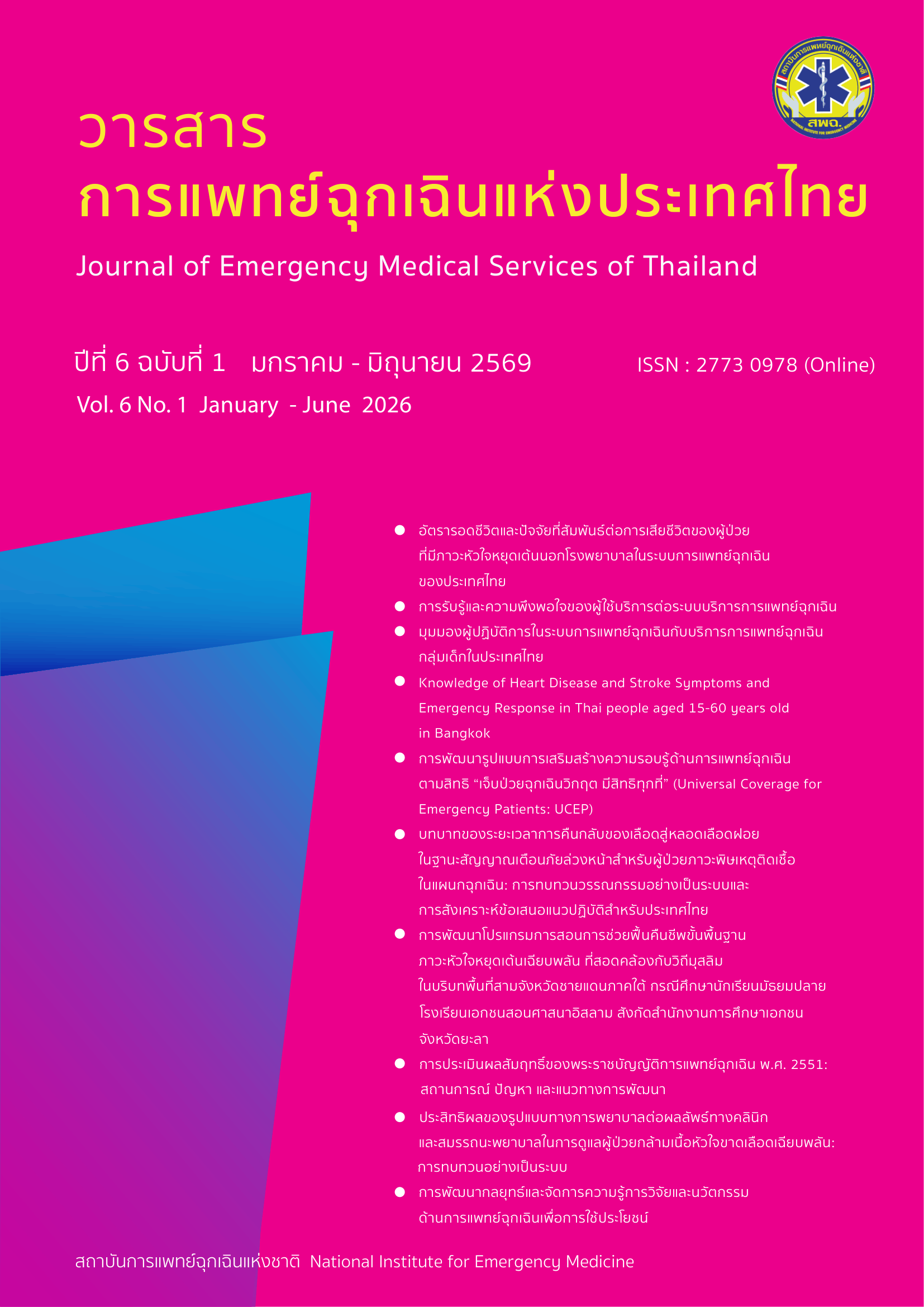
การประเมินผลสัมฤทธิ์ของ พระราชบัญญัติการแพทย์ฉุกเฉิน พ.ศ. 2551: สถานการณ์ ปัญหา และแนวทางการพัฒนา
คำสำคัญ:
ระบบการแพทย์ฉุกเฉิน, การประเมินผลสัมฤทธิ์ของกฎหมาย, สถาบันการแพทย์ฉุกเฉินแห่งชาติบทคัดย่อ
การศึกษานี้มีวัตถุประสงค์เพื่อศึกษาสถานการณ์ สภาพปัญหา และความท้าทายจากการบังคับใช้พระราชบัญญัติการแพทย์ฉุกเฉิน พ.ศ. 2551 และประเมินผลสัมฤทธิ์ของการบังคับใช้กฎหมายดังกล่าว ว่าสามารถบรรลุวัตถุประสงค์ที่กำหนดไว้หรือไม่ รวมทั้งจัดทำข้อเสนอแนะและแนวทางในการปรับปรุงหรือแก้ไขกฎหมายให้สอดคล้องกับบริบทของประเทศไทยในปัจจุบัน โดยใช้ระเบียบวิธีวิจัยเชิงคุณภาพประกอบกับการวิเคราะห์ข้อมูลเชิงปริมาณจากฐานข้อมูลของสถาบันการแพทย์ฉุกเฉินแห่งชาติ ได้แก่ ดัชนีประเมินสมรรถนะของระบบการแพทย์ฉุกเฉิน ข้อมูลการรับรู้และความพึงพอใจของประชาชน รวมทั้งการรับฟังความคิดเห็นจากผู้มีส่วนได้ส่วนเสียผ่านการจัดเวทีรับฟังความคิดเห็น การอภิปรายกลุ่ม และการสัมภาษณ์เชิงลึก ผลการศึกษาพบว่า นับตั้งแต่บังคับใช้กฎหมายในปี พ.ศ. 2551 ระบบการแพทย์ฉุกเฉินมีพัฒนาการที่มีนัยสำคัญ ทั้งในด้านจำนวนผู้ป่วยฉุกเฉินที่ใช้บริการเพิ่มขึ้นร้อยละ 62 ในช่วง 10 ปีที่ผ่านมา และอัตราการรอดชีวิตของผู้ป่วยฉุกเฉินวิกฤตมากกว่าร้อยละ 93 อย่างไรก็ดี ยังคงมีความท้าทายสำคัญ ได้แก่ ความครอบคลุมของหน่วยปฏิบัติการในระดับตำบล งบประมาณของกองทุนการแพทย์ฉุกเฉินที่ไม่เพียงพอ และความซับซ้อนของกฎหมายลำดับรอง งานวิจัยนี้จึงเสนอแนะยุทธศาสตร์ระยะ 1, 3, 5 และ 10 ปีงบประมาณ เพื่อยกระดับการแพทย์ฉุกเฉินให้สอดคล้องกับสถานการณ์และบริบทของประเทศไทย
เอกสารอ้างอิง
Nakahara S, Ichikawa M, Thammasitboon S, Chadbunchachai W, Yokota J. A Thailand case study based on quantitative assessment: does a national lead agency make a difference in pre-hospital care development in middle income countries? Scand J Trauma Resusc Emerg Med 2014;22:75.
พระราชบัญญัติการแพทย์ฉุกเฉิน พ.ศ. 2551. ราชกิจจานุเบกษา เล่มที่ 125, ตอนที่ 44 ก (ลงวันที่ 6 มีนาคม 2551).
สำนักงานคณะกรรมการกฤษฎีกา. คำอธิบายพระราชบัญญัติหลักเกณฑ์การจัดทำร่างกฎหมายและการประเมินผลสัมฤทธิ์ของกฎหมาย พ.ศ. 2562. กรุงเทพมหานคร: สำนักงานคณะกรรมการกฤษฎีกา; 2562.
OECD. Regulatory performance: ex post evaluation of regulatory policies. Paris: OECD Publishing; 2003.
Denzin NK. The research act: a theoretical introduction to sociological methods. 3rd ed. Englewood Cliffs: Prentice Hall; 1989.
OECD. Regulatory policy and governance. Paris: OECD Publishing; 2011.
OECD. Ex-post assessment of regulation. Paris: OECD Publishing; 2018.
Molloy S, Mousmouti M, Vrieze FD. Sunset clauses and post-legislative scrutiny. London: Westminster Foundation for Democracy; 2022.
สุรจิต สุนทรธรรม. การจัดระบบการแพทย์ฉุกเฉินตามเจตนารมณ์แห่งพระราชบัญญัติการแพทย์ฉุกเฉิน พ.ศ. 2551. วารสารวิจัยระบบสาธารณสุข 2552;3(3):346-62.
National Highway Traffic Safety Administration. EMS agenda for the future. Washington DC: US DOT; 1996.
Apiratwarakul K, Tiamkao S, Bhudhisawasdi V, CheungLW, Ienghong K. Fifteen years of sustainable development in EMS under the Emergency Medicine Act of Thailand. Open Access Maced J Med Sci 2022;10(E):987-91.
สถาบันการแพทย์ฉุกเฉินแห่งชาติ. รายงานสถานการณ์สมรรถนะฯ PEPSI ปีงบประมาณ พ.ศ. 2566. นนทบุรี: สถาบันการแพทย์ฉุกเฉินแห่งชาติ; 2566
ไพบูลย์ สุริยะวงศ์ไพศาล, สัมฤทธิ์ ศรีธำรงสวัสดิ์, พินทุสร เหมพิสุทธิ์, บุณยวีร์ เอื้อศิริวรรณ, อังสุมารี ผลภาค, อาณัติ วรรณศรี, และคณะ. การรวบรวมองค์ความรู้และถอดบทเรียนรูปแบบการบริหารจัดการระบบการแพทย์ฉุกเฉินระดับพื้นที่. นนทบุรี: สถาบันการแพทย์ฉุกเฉินแห่งชาติ; 2556.
ดาวน์โหลด
เผยแพร่แล้ว
รูปแบบการอ้างอิง
ฉบับ
ประเภทบทความ
สัญญาอนุญาต
ลิขสิทธิ์ (c) 2026 วารสารการแพทย์ฉุกเฉินแห่งประเทศไทย

อนุญาตภายใต้เงื่อนไข Creative Commons Attribution-NonCommercial-NoDerivatives 4.0 International License.



