Burnout in Learning of Nursing Students, Boromarajonani College of Nursing Udon Thani
Keywords:
Keywords: Burnout in student, Nursing StudentAbstract
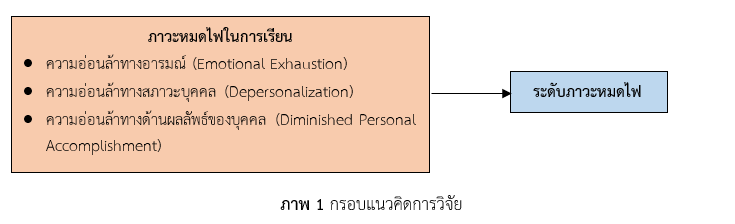
The purpose of this descriptive research was to study and compare burnout in the learning of nursing students, Boromarajonani College of Nursing Udon Thani, academic year 2023. The sample group was nursing students in years 2nd, 3rd and 4th, totalling 233 people. The duration of the study is between July - October 2023. The research instrument is an online questionnaire which is divided into 2 parts, namely general information and burnout in learning questionnaire which is divided into 3 sides: emotional exhaustion, depersonalization and diminished personal accomplishment. Data analysis calculated by frequency, percent, mean, standard deviation, Independent T-test and One-way ANOVA.
The result of this research found that 1) nursing students in the 2nd - 4th years have levels of burnout in learning at moderate level in both the individual part and overall. In the 2nd years (M= 3.11, SD = 0.61), the 3rd years (M= 3.07, SD = 0.42) and the 4th years. (M= 3.17, SD = 0.52)
The compare about burnout in learning with gender, age, college years, GPAX, the intention to study nursing, expenses and the other that makes uncomfortable found that there is no statistical significant difference at the 0.05 level.
The overall about burnout in learning of nursing student is at a moderate level. If the college hasn't solved and prevention for degrade about burnout, it will be liable higher levels in nursing student and will be affect to learning and quality of nurse.
References
กนกวรรณ ศรีสองเมือง. (2559). อิทธิพลของความเครียดในการเรียนที่มี ต่อภาวะหมดไฟในการเรียนของนักศึกษาแพทย์ชั้นคลินิก คณะแพทยศาสตร์มหาวิทยาลัยเชียงใหม่: บทบาทการเป็นตัวแปรปรับของการเรียนรู้การสนับสนุนทางสังคม. [วิทยานิพนธ์ ปริญญาโทที่ไม่มีการตีพิมพ์]. มหาลัยเชียงใหม่.
กัลยา วงษ์สมัย. (2556). ปัจจัยที่มีผลต่อประสิทธิภาพในการปฏิบัติงานของพนักงาน บริการด้านเครื่องรูดบัตรเครดิต(ธนาคารกรุงศรีอยุธยา), (วิทยานิพนธ์ บธ.ม. (บริหารธุรกิจ)), บัณฑิต วิทยาลัย มหาวิทยาลัยสยาม, กรุงเทพ.
กรมสุขภาพจิต. (2564). Burnout Syndrome ภาวะหมดไฟในการทำงาน. https://dmh.go.th/news/view.asp? id=2445.
กอเกษ ต่ายเกิด, ครองขวัญ รั้วมั่น, นิรุชา ปรีชาเลิศศิลป์, วินิทรา นวลละออง และปนัดดา โรจน์พิบูลสถิตย์. (2562). ความชุกและ ปัจจัยที่เกี่ยวข้องของภาวะหมดไฟ (Burnout syndrome) ในนักศึกษาแพทย์ระดับชั้นฟรี คลินิกมหาวิทยาลัยธรรมศาสตร์. วารสารการ แพทย์ธรรมศาสตร์. 2562(19), 27-138.
ชัยยุทธ กลีบบัว. (2552). การพัฒนาโมเดลเชิงสาเหตุของความเหนื่อยหน่ายในการทำงาน: การประยุกต์โมเดลความต้องการทรัพยากรของงาน. วิทยานิพนธ์ศิลปศาสตรมหาบัณฑิต, สาขาวิชาจิตวิทยาอุตสาหกรรมและองค์การ, คณะจิตวิทยา, จุฬาลงกรณ์มหาวิทยาลัย.
ชัยพร พงษ์พิสันต์รัตน์. (2564). ความเหนื่อยหน่ายในการเรียน: สภาวการณ์ที่มิอาจหลีกเลี่ยงได้ Learning Burnout An Inevitable Cirecumstances. วารสารศึกษาศาสตร์ มหาวิทยาลัยมหาสารคาม. 15(1), 8-16.
ธารารัตน์ พรมสาร, ฐิติภรณ์ อรุณถิน, และเบญจมาส มั่นอยู่. (2564). ภาวะหมดไฟทางการเรียนของนิสิตแพทย์ชั้นปีที่ 4 มหาวิทยาลัยนเรศวร. ศึกษาศาสตร์ มหาวิทยาลัยเชียงใหม่, 5(3), 1-10.นครินทร์ ชุนงาม. (2563). สุขภาพจิตและภาวะหมดไฟในการทำงานของแพทย์ในโรงพยาบาลทั่วไปและโรงพยาบาลชุมชนจังหวัดนครราชสีมา. วารสารสุขภาพจิตแห่งประเทศไทย. 28(4), 348-59.
วชิรญาณ์ มณีวรรณ. (2564). ปัจจัยที่ส่งผลต่อภาวะหมดไฟของครูในสถานศึกษา สำนักงานเขตพื้นที่ การศึกษามัธยมศึกษากรุงเทพมหานคร เขต 2. วารสารบริหารการศึกษา มศว, 19(36), 196-207.
วรนุช กิตสัมบันท์. (2538). ความสัมพันธ์ระหว่างความเข้มแข็งอดทน สัมพันธภาพระหว่างบุคคล และความเหนื่อยหน่ายของพยาบาลประจำการในโรงพยาบาลจิตเวช สังกัดกรมสุขภาพจิต. [วิทยานิพนธ์ปริญญามหาบัณฑิต]. เชียงใหม่ : บัณฑิตวิทยาลัย มหาวิทยาลัยเชียงใหม่.
Collopy, K.T. (2012). Are you under stress in EMS?: Understanding the slippery slope of burnout and PTS.D. Continuing Education, (October): 47-56.
Demerouti, E., Mostert, K., & Bakker, A. B. (2010). Burnout and work engagement: A thorough investigation of the independency of both constructs. Journal of Occupational Health Psychology, 15(3), 209–222. http://dx.doi.org/10.1037/a0019408.
Maria Jesús Valero-Chillerón. (2019). Burnout syndrome in nursing students: An observational study. Nurse Education Today. https://www.sciencedirect.com/science/article/abs/pii/S026069171 808566?via%3Dihub.
Maslach, C., Jackson, S.E. and Leiter, M.P. (1996). Maslach burnout inventory. 3rd ed. Palo Alto, California: Consulting Psychologists PressRovinelli, R. J., & Hambleton, R. K. (1997). On the use of content specialists in the assessment of criterion-referenced
Downloads
Published
How to Cite
Issue
Section
License
Copyright (c) 2024 Praboromarajchanok Institute

This work is licensed under a Creative Commons Attribution-NonCommercial-NoDerivatives 4.0 International License.



