Effectiveness of Virtual Reality Arm Step Sensor Version II for Nursing Students Boromarajonani College of Nursing, Udon Thani
Keywords:
Virtual media, Effectiveness, Bandaging, SatisfactionAbstract
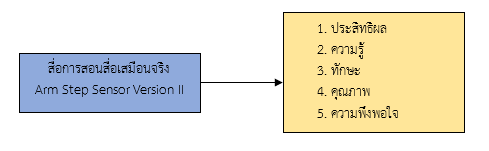
This quasi-experimental study aims to determine the effectiveness of knowledge gained from the use of Arm Step Sensor Version II virtual media and satisfaction with virtual media. The population is the 2nd, 3rd, and 4th nursing students at Boromarajonani College of Nursing, Udon Thani, with a total of 452 people. The sample size was 54 students, determined by using the G*Power program. The IOC of the tool is 0.67. Data were analyzed using frequency, percentage, mean, standard deviation, and pair t-test.
The results of the research found that pre-test and post-test knowledge about bandaging among nursing students was different. Statistically significant at the 0.05 level, correct bandaging skills were mostly at a high level. 2nd-year nursing students had the highest mean (M = 4.76, SD = 2.65). Most items had the highest hand-washing skills before bandaging (M = 4.70, SD = 0.54). Satisfaction with the quality of the media. Third-year nursing students were the highest (M = 4.52, SD = 0.47). The items were most satisfied with innovations that were beautiful, modern, and usable (M = 4.57, SD = 0.63).
From the results of the study, it was found. that the use of teaching media gives students more knowledge and can help them develop their skills more effectively. Teachers should see the importance of using media in teaching and educational institution administration. Models or teaching materials should be supported to enable students to learn and understand the content that can be used to practice various skills. in order to gain expertise.
References
ณัฏฐ์ ดิษเจริญ และคณะ. (2557). การพัฒนาสื่อการเรียนรู้เรื่อง โครงสร้างอะตอมและพันธะเคมี ด้วยเทคโนโลยีออกเมนเต็ดเรียลลิตี้. วารสารหน่วยวิจัยวิทยาศาสตร์ เทคโนโลยีและสิ่งแวดล้อมเพื่อการเรียนรู้ มหาวิทยาลัยอุบลราชธานี, 5(1), 21-27.
ทวีศักดิ์ กาญจนสวรรณ. (2552). เทคโนโลยีมัลติมีเดีย. กรุงเทพฯ: เคทีพี คอมพ์ แอนด์ คอนซัลท์. บุญชม ศรีสะอาด. (2553). การวิจัยเบื้องต้น. พิมพ์ครั้งที่ 8. กรุงเทพฯ:
สุวีริยาสาส์น. ประยงค์ ฐิติธนานนท์. (2562). การพัฒนาระบบสารสนเทศเพื่อประเมินสมรรถนะผู้เรียน. คณะวิทยาการคอมพิวเตอร์ มหาวิทยาลัยราชภัฏอุบลราชธานี. วารสารบัณณฑิตวิทยาลัย พิชญทรรศน์, 14(2), 99-104.
ปิยะธิดา นาคสกุล . (2556). การประดิษฐ์บทเรียนคอมพิวเตอร์ช่วยสอน เรื่อง การพันผ้ายืดสำหรับตอขา. วารสารศึกษาศาสตร์มหาวิทยาลัยนเรศวร, 15(2), 80–85.
พนิดา ตันศิริ.(2553). "โลกเสมือนผสานโลกจริงAugmented Reality". Executive Journal. (online). มหาวิทยาลัยกรุงเทพ.
ยุทธชัย ชัยสิทธิ์, ประเสริฐ ไพบูลย์รุ่งโรจน์. (2555). ภาวะความดันในช่องกล้ามเนื้อสูง: แนวคิดและการปฏิบัติการพยาบาล. วารสารสภาการพยาบาล, 39(3), 65-74
วราพร บุญมี. (2564). สื่อการสอนกับการเรียนรู้ในศตวรรษที่21. วารสารการบริหารนิติบุคคลและนวัตกรรมท้องถิ่น. 7(9), 374-386.
วรัญญา ลี้มิ่งสวัสดิ์, ศิริรัตน์ เพ็ชร์แสงศรี และสมเกียรติ ตันติวงศ์วาณิช, (2558). ผลของการจัดการเรียนรู้โดยใช้เทคโนโลยีเสมือนจริงด้วยการ์ตูนแอนิเมชันที่มีต่อผลสัมฤทธิ์ทางการเรียน เรื่อง เครื่องหมายและสัญลักษณ์ทางดนตรีสำหรับนักเรียนระดับชั้นมัธยมศึกษาตอนต้น. วารสารครุศาสตร์อุตสาหกรรม, 14(3), 607-614
ศษมา แสนปากดี. (2557). การประยุกต์ใช้เทคโนโลยีเสมือนจริงในบอร์ดประชาสัมพันธ์ประชาคมเศรษฐกิจอาเซียน. วารสารวิทยาศาสตร์และเทคโนโลยี, (ฉบับพิเศษ), 257-264.
พิเชนทร์ จันทร์, อภิวัฒน์ วัฒนะสุระ. (2561). สือการเรียนรู้ด้วยเทคโนโลยีมิติเสมือนจริง เรื่อง คำศัพท์ภาษาอังกฤษสัตว์โลกน่ารู้. สืบค้นเมื่อ 6 มกราคม 2565 จาก http://it.rmu.ac.th/project-journal/assets/ uploads/formidable/6/4- 1-4-23-28.pdf
Cohen, J. (1988). Statistical power analysis for the behavioral sciences. (2nd). Hillsdale, NJ: Lawrence Erlbaum Associates, Publishers.
Faul, F., Erdfelder, E., Lang, A. G., & Buchner, A. (2007). G*Power 3: A flexible statistical power analysis program for the social, behavioral, and biomedical sciences. Behavior Research Methods, 39(2), 175-191.
Parker, B., & Myrick, F. (2010). Transformative learning as a context for human patient simulation. Journal of Nursing Education, 49(6), 326-332.
Downloads
Published
How to Cite
Issue
Section
License
Copyright (c) 2024 Praboromarajchanok Institute

This work is licensed under a Creative Commons Attribution-NonCommercial-NoDerivatives 4.0 International License.



