
the The effect of the health promotion program for HIV/AIDS patients on health behavior Of HIV/AIDS patients at Napa Clinic, Sichiangmai Hospital. The effect of the health promotion program for HIV/AIDS patients on health behavior Of HIV/AIDS patients at Napa Clinic, Sichiangmai Hospital.
Article Sidebar
Main Article Content
Abstract
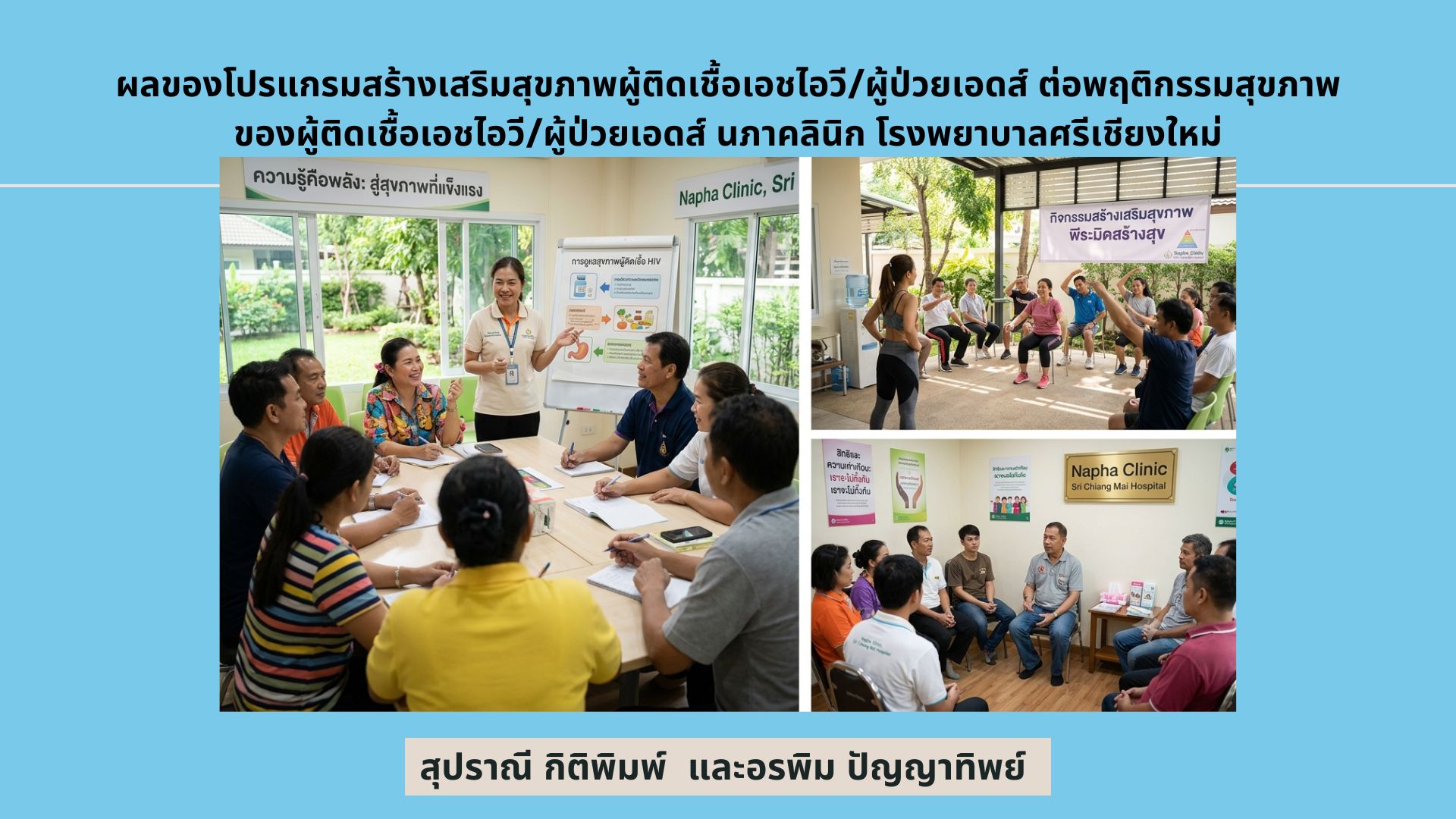
This quasi-experimental study employed a one-group pretest–posttest design to examine the effects of a health promotion program on the health behaviors of people living with HIV/AIDS attending the HIV clinic at Sichiangmai Hospital. A purposive sample of 33 participants who met the predetermined inclusion criteria was recruited for the study. The participants received the health promotion program developed by the researchers. Data were collected using a structured interview questionnaire. Descriptive statistics, including frequency, percentage, mean, and standard deviation, were used to summarize the data. Differences in health behavior scores before and after participation in the program were analyzed using the paired-samples t-test, with the level of statistical significance set at .05.
The findings revealed that, following participation in the health promotion program, the participants demonstrated significantly improved health behaviors in the domains of nutrition, interpersonal relationships, health responsibility during antiretroviral therapy, stress management, and physical activity and exercise compared with their pre-intervention scores (p < .05). However, no statistically significant difference was observed in the domain of spiritual growth. These findings suggest that the health promotion program effectively enhances positive health behaviors among people living with HIV/AIDS, thereby contributing to improved physical health, reducing the risk of opportunistic infections, and supporting effective suppression of viral replication. The program may therefore serve as an effective intervention to promote long-term health outcomes and improve the quality of life of people living with HIV/AIDS.
Keywords : health promotion program, health behavior, HIV patients, AIDS patients
Article Details
References
อัชณา อ่าทอง. การพยาบาลผู้ป่วยติดเชื้อเอชไอวี/เอดส์ที่มีภาวะแทรกซ้อนจากเชื้อฉวยโอกาส. วารสารสาธารณสุขมูลฐาน (ภาคเหนือ) 2567:
(1) ;2- 11.
กองโรคเอดส์และโรคติดต่อทางเพศสัมพันธ์ กรมควบคุมโรค. HIV INFO HUB [อินเตอร์เน็ต]. 2562 [เข้าถึงเมื่อ 7 มิถุนายน 2568]. เข้าถึงได้จาก:
https://hivhub.ddc.moph.go.th/
อุษา จันทร์กลิ่น และ ภัทรพล มากมี . ปัจจัยที่มีอิทธิพลต่อการเปิดเผยตัวของผู้ติดเชื้อเอชไอวีและผู้ป่วยเอดส์จังหวัดแห่งหนึ่งในภาคเหนือตอนล่าง.วารสาร
เกื้อการุณย์ 2565; 29(1): 41-53.
สำนักงานหลักประกันสุขภาพแห่งชาติ. ข้อมูลสารสนเทศการให้บริการผู้ติด เชื้อเอชไอวี/ ผู้ป่วยเอดส์ โรงพยาบาลศรีเชียงใหม่. [อินเตอร์เน็ต]. 2566 [เข้าถึง
เมื่อ 8 มิถุนายน 2568]. เข้าถึงได้จาก: https://dmis.nhso.go.th/NAPPLUS/login.do
Friedland GH. HIV medication adherence: the intersection of biomedical, behavioral and social science research and clinical
practice. Journal of Acquired Immune Deficiency Sydrome. 2006; 43(1) : 1-7.
Sidat M, Fairley C, Grierson J. Experiences and perception of patients with 100% adherence to highly active antiretroviral therapy: A
qualitative study. AIDS Patient Care and STDs 2007; 21(7): 509-52.
Department of Disease Control. Ministry of Public Health Thailand & MOPH-US. CDC Collaboration. Thailand nation antiretroviral
treatment guideline 2006/2007. Bangkok: The agricultural co-operation federation of Thailand; 2009
ยุวดี ฤาชา และคณะ. วิจัยทางการพยาบาล. พิมพ์ครั้งที่ 6. โรงพิมพ์สยามพริ้นติ้ง กรุงเทพมหานคร; 2540.
สุวรรณา บุญยะลีพรรณ, เจียมจิต แสงสุวรรณ, สมใจ พุทธาพิทักษ์ผล, อารีวรรณ กลั่นกลิ่น, วลัยพร นันท์ศุภวัฒน์, จิตภินันท์ ศรีจักรโคตร, และคณะ.
พฤติกรรมสุขภาพผู้ติดเชื้อเอชไอวี/ผู้ป่วยเอดส์วัยแรงงานที่ได้รับการรักษาด้วยยาต้านไวรัสเอชไอวีในโรงพยาบาลตติยภูมิแห่งหนึ่ง. พยาบาลสาร 2556;
(40) : 1-13.
Pender NJ, Murdaugh CL, Parsons MA. Health Promotion in Nursing Practice (5thed). New Jersey: Pearson Education; 2006.
วีรชัย ตรีวัฒนาวงศ์. ผลการพัฒนาระบบการดูแลรักษาผู้ป่วยติดเชื้อเอช ไอ วี/ผู้ป่วยเอดส์ โรงพยาบาลพระนารายณ์มหาราช. โรงพยาบาลสิงห์บุรีเวชสาร
; 26 (2): 17-30.
ภาณุพงศ์ จันทโรจน์. ผลของโปรแกรมการจัดการตนเองต่อพฤติกรรมการจัดการตนเอง ปริมาณเชื้อเอชไอวีในเลือด และระดับซีดีโฟร์ของผู้ติดเชื้อเอชไอวี.
พยาบาลศาสตรมหาบัณฑิต บัณฑิตวิทยาลัย มหาวิทยาลัยนเรศวร; 2567.
อรดี โชติเสน, สุรเดช ประดิษฐบาทุกา, อารี ชีวเกษมสุข. ปัจจัยที่มีความสัมพันธ์กับพฤติกรรมสุขภาพของผู้ติดเชื้อเอชไอวี/เอดส์ กรณีศึกษา โรงพยาบาลสิ
รินธร สังกัดสำนักการแพทย์ กรุงเทพมหานคร. วารสารพยาบาลทหารบก. 2558; 16(1): 41-50.
สุพัตรา คงปลอด พูลสุข เจนพานิชย์ วิสุทธิพันธ์อรสา พันธ์ภักดี. การรับรู้ความต้องการการดูแลตนเองและพฤติกรรมการดูแลตนเองของผู้ป่วยเอดส์ที่ติดเชื้อ
ฉวยโอกาส. Rama Nurs J 2015; 21(1): 38-51.
ชัยกฤติ ดีวะลา และฑิฏฐิธนา บุญชู. รายงานการวิจัย เรื่อง ผลของโปรแกรมการดูแลรักษาผู้ติดเชื้อเอชไอวี/ผู้ป่วยเอดส์ ต่อพฤติกรรมการดูแลตนเองของผู้
ติดเชื้อเอชไอวี/ผู้ป่วยเอดส์ ที่ขาดนัดคลินิกนภา โรงพยาบาลบึงกาฬ. (อัดสำเนา); 2566.
อุไรวรรณ โกเสนตอ. ประสิทธิผลของโปรแกรมการให้ความรู้เกี่ยวกับการใช้ยาต้านไวรัสในผู้ติดเชื้อ HIV ณ.โรงพยาบาลดารารัศมี เชียงใหม่. วารสาร
สาธารณสุขล้านนา 2557; 11(1): 1-11.
ทิพย์นราภรณ์ สังข์ศรีแก้ว. ผลของโปรแกรมสนทนาบำบัดสำหรับผู้ติดเชื้อเอชไอวี/เอดส์ และครอบครัวต่อพฤติกรรมสุขภาพของผู้ติดเชื้อเอชไอวี/เอดส์ ที่
ได้รับยาต้านไวรัส. วิทยานิพนธ์หลักสูตรพยาบาลศาสตร์มหาบัณฑิต สาขาวิชาการพยาบาลเวชปฏิบัติครอบครัว คณะพยาบาลศาสตร์ : มหาวิทยาลัยบูรพา;
